
أخبار
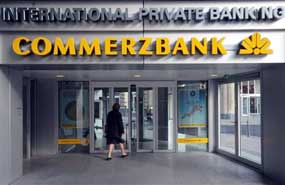
US Anti-Cuba Blockade Policy Punishes German Commerzbank
The United States Treasury Department Office for Foreign Assets Control (OFAC) imposed on the New York branch of Germany's Commerzbank a fine of $175,000 for accepting transactions that violate the 50-year blockade on the Republic of Cuba
مصدر
Prensa Latina
التاريخ
The United States Treasury Department Office for Foreign Assets Control (OFAC) imposed on the New York branch of Germany's Commerzbank a fine of $175,000 for accepting transactions that violate the 50-year blockade on the Republic of Cuba
The US governm.ent claims the second largest bank in Germany was the consultant in a September 2005 transaction between a Cuban company and a Canadian partner, on which Commerzbank never informed the OFAC.
This report of the Treasury terms the operation a notorious case of violation of US Laws and "Commerzbank should be aware of the prohibitions concerning the Cuba Case (.....) to prevent such violations in the future."
Last November 186 among 191 countries voted for the 20th consecutive occasion at the UN General Assembly against the anti-Cuba coersive policy by every US Administration from the triumph of the Revolution.
The government of Cuba has been exposing in world forums documented evidence of the over $975 billion loss it has endured through nearly six decades of commercial harassment.
This very year and before the case of the German bank, JP Morgan Chase paid a $88.3M fine for alleged transgression of White House regulations to deal with Cuba, with the Treasury claiming that JP Morgan participated in 1,711 transfers for $176 million involving either private people or Cuban institutions.
Earlier, the US branch of CMA-CNG, the third largest container shipping company, was fined $374,400 for transporting cargo to Havana.
In December 2008, Credit Swisse Bank paid a $536M sanction because of its financial agreements with Cuba.
In January this year, a resolution of President Barack Obama introduced slight changes to the regulations on the US blockade but the most stringent terms remain in force.
He did approve of trips to Cuba for academic, religious, cultural or sports events, within a framework Washington defines as "promotion of people-to-people contacts."
The US governm.ent claims the second largest bank in Germany was the consultant in a September 2005 transaction between a Cuban company and a Canadian partner, on which Commerzbank never informed the OFAC.
This report of the Treasury terms the operation a notorious case of violation of US Laws and "Commerzbank should be aware of the prohibitions concerning the Cuba Case (.....) to prevent such violations in the future."
Last November 186 among 191 countries voted for the 20th consecutive occasion at the UN General Assembly against the anti-Cuba coersive policy by every US Administration from the triumph of the Revolution.
The government of Cuba has been exposing in world forums documented evidence of the over $975 billion loss it has endured through nearly six decades of commercial harassment.
This very year and before the case of the German bank, JP Morgan Chase paid a $88.3M fine for alleged transgression of White House regulations to deal with Cuba, with the Treasury claiming that JP Morgan participated in 1,711 transfers for $176 million involving either private people or Cuban institutions.
Earlier, the US branch of CMA-CNG, the third largest container shipping company, was fined $374,400 for transporting cargo to Havana.
In December 2008, Credit Swisse Bank paid a $536M sanction because of its financial agreements with Cuba.
In January this year, a resolution of President Barack Obama introduced slight changes to the regulations on the US blockade but the most stringent terms remain in force.
He did approve of trips to Cuba for academic, religious, cultural or sports events, within a framework Washington defines as "promotion of people-to-people contacts."