
Cuban and US researchers left today for the Alejandro de Humbolt National Park to carry out an intensive 20-day study of the fauna biodiversity in that region of Cuba's easternmost tip.
The venture is part of a collaboration agreement between the National Museum of Natural History of Cuba (MNHN), the American Museum of Natural History of New York (AMNH) and PNAH, from the Ministry of Science, Technology and Environment of Cuba (CITMA).
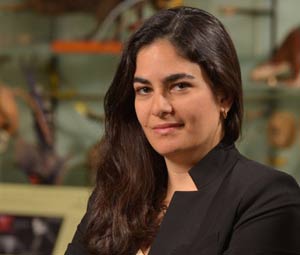
Director of the Center for Biodiversity and Conservation of AMNH, Ana Luz Porzecanski, told Prensa Latina that her team is travelling under the banner Explore-21, an initiative promoted by her institution since 2013.
They are scientific expeditions to study natural history and discover new species in exceptional places like the Humbolt Mark, she said.
This is the third such multidisciplinary excursion, the previous ones involved the Salomon Islands and Papua New Guinea, considered bold and innovative foe the use of new technologies for scientific discoveries.
In the case of this Cuban area, declared World Heritage by Unesco, we really hope to discover unknown aspects of biodiversity supported by Cuban scientists, she stated.
We place technology at the service of science, but the researchers here contribute their experience, which is an honor; it will be a mutual feedback process, Porzecanski told Prensa Latina.
Besides, we are sure this is only the start of a new stage of scientific collaboration between the two nations, which will benefit both, though the MNHN and the AMNH boast longstanding cooperation, she added.
The US expert highlighted the peculiarities that makes Humbolt Park one of the most beautiful and most important sites in the Caribbean islands and appreciated the great, warm welcome received upon arriving in this city.
"We are sure this expedition will be fruitful in all respects," she stressed.