
Noticias
Angola Denounces Inhumane US Policy Towards Cuba
The illegal trafficking of immigrants is a crime triggered by the unjust world economic order, and in case of Cuba, it is subject to a discriminatory and inhuman policy imposed by the United States, Cuban attorney Patricia Rizo said here today.
Fuente
Prensa Latina
Fecha
The illegal trafficking of immigrants is a crime triggered by the unjust world economic order, and in case of Cuba, it is subject to a discriminatory and inhuman policy imposed by the United States, Cuban attorney Patricia Rizo said here today.
"Washington has maintained in force since 1996 the so-called Cuban Adjustment Act, and its wet foot/dry foot policy has encouraged and promoted illegal immigration," said Rizo, head of the International Relations department at the Attorney's Office of the Republic of Cuba, in her speech during Legal Week, sponsored by the Angolan Public Prosecutor's Office.
After presenting her paper "Fighting human and organ trafficking," the official said that selective law establishes that those Cubans who manage to arrive in U.S. mainland receive authorization to stay in that nation without complying with migratory requirements.
However, those exigencies are strictly established for citizens from other Latin American, African, and Asian countries.
While that reality exists, the Cuban State has adopted Decree-laws 302 and 303 that changed Cuba's current migratory regulations and significantly increased the entry or exit from the country for citizens and foreigners who visit the island.
Meanwhile, Rizo highlighted that the inter-relationship among all institutions of Cuban society allows for participation in multiple strategies for preventing and confronting crime, as well as eradicating phenomena that are not unique to Criminal Law.
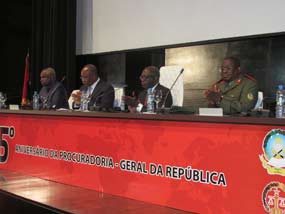
Facing complex criminal behaviors, it is indispensable that there be a high level of coordination between the institutions responsible for the prevention and struggle against criminality, the Cuban attorney said. Along with judges, lawyers, attorneys, and law students of Angola are attending the event, which also celebrates the 25th anniversary of the Public Prosecution Office, along with authorities from the Public Ministries of Cuba, South Africa, the Democratic Republic of Congo, Rwanda, Namibia, Mozambique, Uganda, and Brazil.
"Washington has maintained in force since 1996 the so-called Cuban Adjustment Act, and its wet foot/dry foot policy has encouraged and promoted illegal immigration," said Rizo, head of the International Relations department at the Attorney's Office of the Republic of Cuba, in her speech during Legal Week, sponsored by the Angolan Public Prosecutor's Office.
After presenting her paper "Fighting human and organ trafficking," the official said that selective law establishes that those Cubans who manage to arrive in U.S. mainland receive authorization to stay in that nation without complying with migratory requirements.
However, those exigencies are strictly established for citizens from other Latin American, African, and Asian countries.
While that reality exists, the Cuban State has adopted Decree-laws 302 and 303 that changed Cuba's current migratory regulations and significantly increased the entry or exit from the country for citizens and foreigners who visit the island.
Meanwhile, Rizo highlighted that the inter-relationship among all institutions of Cuban society allows for participation in multiple strategies for preventing and confronting crime, as well as eradicating phenomena that are not unique to Criminal Law.
Facing complex criminal behaviors, it is indispensable that there be a high level of coordination between the institutions responsible for the prevention and struggle against criminality, the Cuban attorney said. Along with judges, lawyers, attorneys, and law students of Angola are attending the event, which also celebrates the 25th anniversary of the Public Prosecution Office, along with authorities from the Public Ministries of Cuba, South Africa, the Democratic Republic of Congo, Rwanda, Namibia, Mozambique, Uganda, and Brazil.