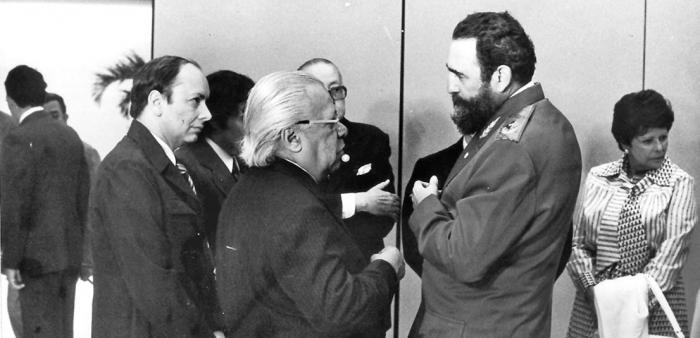
In 1972, in Manzanillo, a young poet wrote: In Quito, an old woman / almost a hundred years old / after seeing Fidel / embrace her beard, her smile / her heart full of the people /—a whole tremor / an incredible ember in her ashes— / told her grandson / that she could die now / that she was happy now / because she had seen / the man*.
"Let me tell you first of all that the Revolution defends freedom, that the Revolution has brought the country a great many freedoms, that the Revolution cannot by its very nature be an enemy of freedom; that if anyone is worried that the Revolution will stifle their creative spirit, that worry is unnecessary, that worry has no reason to exist".