
Infos
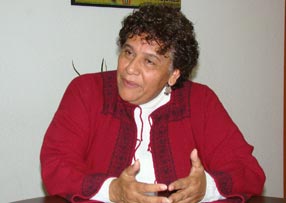
Cuban Teaching Method Reaches Mexican Indigenous People
The Cuban teaching method Yo sí puedo (Yes, I Can) has arrived in Mexico to assist authorities in the fight to fill the inequality gap that affects the most vulnerable people, the indigenous persons, according to an expert.
Source
Prensa Latina
Date
The Cuban teaching method Yo sí puedo (Yes, I Can) has arrived in Mexico to assist authorities in the fight to fill the inequality gap that affects the most vulnerable people, the indigenous persons, according to an expert.
"It is a way to offer those people the basic conditions to subsist so they can solve this old problem of ignoring how to read and write," said Rosa Marquez, Secretary of Rural Development and Equity for the Communities (SEDEREC) in an interview with Prensa Latina.
In Mexico City there is "a large presence of native people who are very active," she said.
Marquez said that most native people in the Federal District live "in the delegations of Ixtapalapa, Gustavo Madero and Cuauhtemoc, the latter at the center of the city and its commercial activity."
She said four Cuban collaborators are already here advising facilitators of this educational program, born on March 28, 2001 at the initiative of leader of the Cuban Revolution Fidel Castro.
At least 176 are beneficiaries of the Cuban method in the DF; being the youngest 15 years old and the oldest 94 years old. "There is particularly great interest among the elderly", said Marquez.
She said it is not too much at the moment, but it has a great impact.
Marquez noted that the Cuban teaching method has increasingly gained prestige worldwide, as it has been applied successfully and has benefited more than five million people in 28 nations, including Venezuela, Bolivia, Argentina, Ecuador, Nicaragua, the Dominican Republic, Brazil, New Zealand, Mozambique, El Salvador and Saint Kitts and Nevis, besides Mexico.
Marquez expressed admiration for the way Cuba has done so much in the education field despite being so tiny a nation.
"I think that has to do with the peoples decision to build their own future. And more than passionate speeches we are witnessing concrete deeds here," she said.
At least 5.90 million Mexican adults are illiterate, according to estimates.
"It is a way to offer those people the basic conditions to subsist so they can solve this old problem of ignoring how to read and write," said Rosa Marquez, Secretary of Rural Development and Equity for the Communities (SEDEREC) in an interview with Prensa Latina.
In Mexico City there is "a large presence of native people who are very active," she said.
Marquez said that most native people in the Federal District live "in the delegations of Ixtapalapa, Gustavo Madero and Cuauhtemoc, the latter at the center of the city and its commercial activity."
She said four Cuban collaborators are already here advising facilitators of this educational program, born on March 28, 2001 at the initiative of leader of the Cuban Revolution Fidel Castro.
At least 176 are beneficiaries of the Cuban method in the DF; being the youngest 15 years old and the oldest 94 years old. "There is particularly great interest among the elderly", said Marquez.
She said it is not too much at the moment, but it has a great impact.
Marquez noted that the Cuban teaching method has increasingly gained prestige worldwide, as it has been applied successfully and has benefited more than five million people in 28 nations, including Venezuela, Bolivia, Argentina, Ecuador, Nicaragua, the Dominican Republic, Brazil, New Zealand, Mozambique, El Salvador and Saint Kitts and Nevis, besides Mexico.
Marquez expressed admiration for the way Cuba has done so much in the education field despite being so tiny a nation.
"I think that has to do with the peoples decision to build their own future. And more than passionate speeches we are witnessing concrete deeds here," she said.
At least 5.90 million Mexican adults are illiterate, according to estimates.