
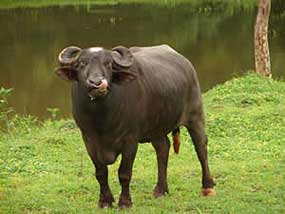
More than 200 delegates from 20 countries have confirmed their attendance to the 6th International Symposium on Buffalos in Latin America and Europe, scheduled from November 21-26 in Havana, an official source informed.
The executive secretary of the event, Andres Dominguez, said that producers, breeders and experts from Argentina, Brazil, Colombia, Costa Rica, Spain, the United States, Guatemala, Italy, Macedonia, Mexico, Panama, Peru, El Salvador, Thailand, Trinidad and Tobago and other countries have confirmed participation so far.
The forum is organized by the International and the American Buffalo Federations, which suggested Cuba as the venue for this meeting.
Dominguez said that Cuba is expected to show its main results in buffalo raising and breeding and the impact of reproductive technologies on them, as well as the nutritional value of their milk and dairy products.
It will also show experiences in the production of buffalo meat and its influence on human health, said Dominguez, an academic from the Tropical Stockbreeding Animal Improvement Research Center (CIMAGT).
Participants will discuss the prospects for development and reproduction of buffalos in Latin America, artificial insemination and buffalo-related technologies.
Other issues to be discussed include the quality of meat and its production and handling in tropical weather conditions.
The Cuban delegation is made up of 120 specialists, including producers, academics, veterinarians, researchers and officials.
Dominguez noted that the program for the meeting includes workshops, lectures, round tables and essays, as well as a tour of Mayabeque, Villa Clara and Sancti Spiritus provinces, in western and central Cuba.
The advantages of buffalo raising and stockbreeding include the fact that they are strong animals that grow rapidly, resist extreme conditions and have a high birthrate (over 95 percent), pointed out Dominguez, who added that Cuba has plans to continue developing the species in all provinces.